Discover the biggest e-commerce trends of 2025, including AI, social commerce, AR shopping, and sustainability, only on Business Wire.
E-commerce Trends 2025 are set to reshape online shopping with AI, AR, social commerce, and sustainability leading the way. Understanding the biggest E-commerce Trends 2025 is essential for brands that want to stay competitive in the rapidly evolving digital marketplace. E-commerce is evolving faster than ever. With AI, social commerce, sustainability, and immersive technologies becoming mainstream, 2025 is expected to be a landmark year for online retail. Global e-commerce sales are projected to surpass $4.8 trillion in 2025 (Shopify), and businesses that adapt to these trends will be the ones leading the market.
As we step into 2025, businesses that align their strategies with the top E-commerce Trends 2025 will future-proof growth and customer trust.
In this blog, we’ll explore the top e-commerce trends for 2025, drawing inspiration from insights originally published on The Future of Commerce by Geert Leeman, along with additional data from other trusted sources.
Table of Contents
1. AI-Powered Personalization in E-commerce Trends 2025: Smarter Shopping Experiences:
AI is no longer just a support tool—it’s becoming the core driver of e-commerce growth. From predictive product recommendations to hyper-personalized email campaigns, AI will help brands deliver tailored experiences at scale.
By 2025, generative AI is predicted to power 10% of all product data, up from just 1% in 2021 (The Future of Commerce).
For businesses, this means higher conversion rates and stronger customer loyalty.
This shows how AI is at the core of E-commerce Trends 2025, transforming how businesses connect with customers.

2. Data Privacy & Security: Building Trust:
Shoppers want personalization, but not at the cost of their privacy. Stricter global data regulations (like GDPR and CCPA) will push businesses to adopt transparent, consent-driven marketing and secure payment systems.
Blockchain technology is also expected to play a growing role in authenticating transactions and improving trust in online marketplaces (BigCommerce).
Stronger security and trust-building will remain central pillars of E-commerce Trends 2025.
3. Social Commerce in E-commerce Trends 2025: The Rise of Social Commerce:
Social platforms like Instagram, TikTok, and YouTube are quickly transforming into shopping destinations. By 2025, more than 30% of online sales are expected to come from social commerce channels.
For Gen Z and Millennials, social shopping is not just a feature but a lifestyle, making it one of the fastest-growing E-commerce Trends 2025.

4. Conversational & Voice Commerce:
Voice assistants like Alexa, Google Assistant, and Siri are making online shopping faster and more natural. Conversational commerce is expected to grow as consumers embrace voice searches, AI chatbots, and messaging apps for purchases.
Voice search and AI chatbots are redefining shopping convenience, proving why conversational commerce is a major part of E-commerce Trends 2025.
5. Immersive Shopping with AR & VR:
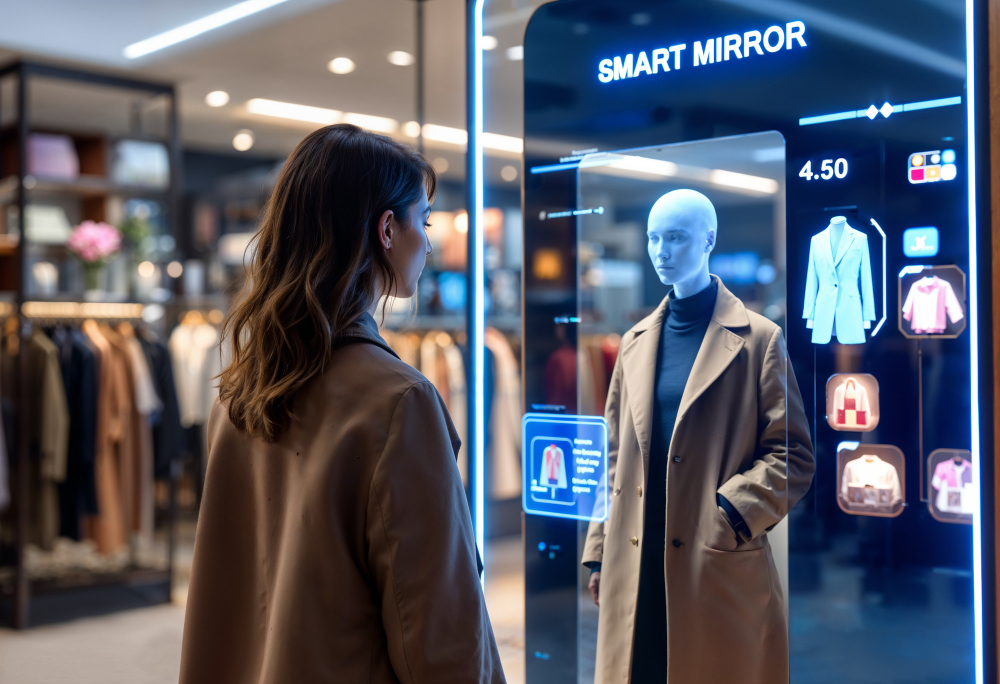
By 2025, Augmented Reality (AR) will be a standard feature in online retail. From trying on clothes virtually to previewing furniture in your living room, AR will reduce return rates and boost customer confidence.
AR and VR are no longer optional but essential, standing out as key E-commerce Trends 2025.
6. Sustainability: From Trend to Necessity:
Eco-friendly packaging, carbon-neutral delivery, and sustainable supply chains will become non-negotiable for brands. Research shows that more than 70% of shoppers prefer sustainable brands, and by 2025, this will directly influence purchase decisions.
Brands embracing sustainability will not only attract conscious consumers but also build long-term brand trust.
Sustainability is more than a buzzword — it’s becoming a necessity and a defining element of E-commerce Trends 2025.

6. Payment Innovations & FinTech in E-commerce Trends 2025:
Payment methods are also evolving. In 2025, Buy Now, Pay Later (BNPL) services, digital wallets like Apple Pay, Google Pay, and even cryptocurrency payments are expected to become mainstream.
Consumers demand faster, safer, and more flexible payment methods. Retailers that integrate multiple options—including local payment gateways—will increase trust and conversions.
7. The Human Side of Digital Commerce:
Despite AI, AR, and automation dominating the landscape, customers will still value human connection. Brands that combine technology with empathy—such as hybrid AI + human support, transparent communication, and authentic branding—will thrive.
E-commerce in 2025 is not just about transactions. It’s about relationships, trust, and community building.
8. Smarter Logistics & Q-Commerce:
The rise of Q-commerce (quick commerce)—where deliveries are completed in less than an hour—is reshaping consumer expectations (Wikipedia).
In 2025, AI-driven inventory forecasting, last-mile delivery optimization, and automated warehouses will make logistics more efficient and cost-effective.
From drone deliveries to predictive inventory management, smarter logistics define the speed-first world of E-commerce Trends 2025.
Data aggregation will also play a critical role in making quick commerce efficient. In fact, we’ve explained how and why data aggregation should be applied in the logistics supply chain to improve visibility and forecasting.

9. Subscription Commerce Evolves:
Subscription models are no longer limited to streaming services. From groceries to fashion, personalized and flexible subscriptions will dominate in 2025.
Unlike the rigid subscriptions of the past, the next generation will focus on customization, easy opt-outs, and dynamic pricing to boost retention.
Flexible and personalized subscription models will dominate, cementing their place in E-commerce Trends 2025.
10. Global Growth of E-Commerce in 2025:
According to reports from Statista and Shopify, e-commerce sales are projected to exceed $4.8 trillion globally by 2025. This growth isn’t just about new technologies—it’s also being fueled by changing consumer habits. More people are shopping online than ever before, especially in emerging markets like Southeast Asia, the Middle East, and Africa.
Mobile commerce (m-commerce) is a major driver of this trend. By 2025, nearly 70% of all online purchases will be made using smartphones, showing the importance of mobile-first websites and apps. Retailers that fail to optimize for mobile risk losing a massive share of customers.
11. Subscription Commerce Evolves:
Subscription commerce is moving far beyond streaming platforms. In 2025, we’ll see subscription models becoming a core part of everyday shopping, covering categories like groceries, fashion, beauty, and even household essentials. Unlike the rigid, one-size-fits-all subscriptions of the past, the new wave of subscription services will focus on personalization and flexibility.
Shoppers will expect options to tailor their deliveries, pause or cancel anytime, and enjoy dynamic pricing models that adjust to usage and demand. This evolution is designed to boost customer satisfaction while improving long-term retention for businesses. By making subscriptions more adaptive, brands can build stronger relationships with customers who value convenience, predictability, and personalization in their shopping journey.
12. Customer Experience & Retention in E-commerce Trends 2025:
While new customer acquisition is important, 2025 will emphasize retention strategies. Businesses will focus on:
- Loyalty programs with personalized offers.
- Gamified shopping experiences that keep customers engaged.
- AI-driven remarketing campaigns to reduce cart abandonment.
Research shows that retaining a customer is 5× cheaper than acquiring a new one. In 2025, retention will be the real growth driver.
13. AI-Powered Customer Support:
Chatbots and virtual assistants are getting smarter. By 2025, AI-driven customer support will handle over 80% of routine queries, reducing response times and improving customer satisfaction.
The challenge for brands will be blending automation with human empathy.
Customer service powered by AI is no longer futuristic — it’s already shaping the landscape of E-commerce Trends 2025.

14. The Role of Artificial Intelligence Beyond Personalization:
AI in e-commerce is not limited to recommendations and chatbots. In 2025, AI will also:
- Automate supply chain management, predicting stock shortages before they happen.
- Assist in fraud detection and reduce chargebacks by analyzing suspicious transactions.
- Generate product descriptions, ads, and even videos using generative AI.
This means brands can operate more efficiently while focusing on customer relationships. AI is becoming not just a tool but a business partner.
15. Composable Commerce & Headless Platforms:
Traditional monolithic e-commerce platforms are giving way to headless and composable commerce solutions. This modular approach allows businesses to integrate best-in-class tools for payments, marketing, and analytics.
Not only does this provide flexibility and scalability, but it also improves site performance and SEO rankings (Wikipedia).
16. Cross-Border E-commerce Trends 2025 & Global Marketplaces:
Another major trend is cross-border e-commerce. Platforms like Amazon, Alibaba, and Noon are making it easier for businesses to sell globally. AI Will also:
- Over 25% of e-commerce sales will come from international markets.
- Shoppers will expect faster global delivery and transparent customs processes.
- Businesses will use localized websites, currencies, and languages to win global audiences.
International expansion and global marketplaces are increasingly shaping the biggest E-commerce Trends 2025.
This means small businesses can reach global customers as easily as large corporations.
Real-World Case Studies: How Leading Brands Are Driving E-commerce Trends 2025:
While trends highlight the future, case studies show how these innovations are already working in practice:
- Amazon: Amazon continues to set the benchmark for innovation in online retail. With AI-powered personalization, it analyzes billions of data points daily to recommend products tailored to each shopper. Its “anticipatory shipping” model, powered by predictive analytics, is designed to deliver products to local warehouses before customers even order them, reducing delivery times drastically. Amazon has also invested heavily in automated warehouses and drone deliveries, reinforcing its dominance in quick commerce. Amazon’s anticipatory shipping model cements its role in E-commerce Trends 2025.
Impact: By 2025, Amazon’s logistics innovations are expected to reduce average delivery times by up to 40%, strengthening its customer loyalty and market leadership.
- Zalando: European fashion giant Zalando is making headlines with its AI styling assistant, which recommends outfits based on body type, preferences, and past purchases. This goes beyond personalization—it enhances the customer’s fashion journey. Zalando has also been proactive in sustainability, pledging that by 2025, 100% of its private-label products will be made from sustainable materials. Zalando’s sustainability-first approach makes it a key player in E-commerce Trends 2025.
Impact: Zalando’s sustainability-first strategy resonates with Europe’s eco-conscious shoppers and is a key driver in reducing returns—one of the biggest challenges in online fashion retail.
- TikTok Shop: TikTok has transformed from a short-video platform into a global e-commerce powerhouse. Its “Shop Now” and live-stream shopping features allow creators to sell directly to their audiences. This model combines entertainment, community, and commerce—an unbeatable mix for Gen Z consumers. By 2025, TikTok Shop is projected to account for $20 billion in annual sales (Reuters). TikTok’s live shopping is redefining social commerce as part of E-commerce Trends 2025.
Impact: The platform is democratizing e-commerce by enabling small businesses and influencers to compete with big brands—reshaping how products are discovered and sold.
- IKEA: Furniture giant IKEA has embraced technology to overcome one of online shopping’s biggest challenges: uncertainty about how products fit into a customer’s space. Its IKEA Place AR app allows users to preview furniture in real-time within their homes before making a purchase. The company is also experimenting with VR showrooms and sustainable product lines to appeal to environmentally conscious buyers. IKEA’s AR app shows how immersive tech leads in E-commerce Trends 2025.
Impact: IKEA’s AR solutions have reduced return rates and boosted customer confidence, making it a leader in immersive commerce experiences.
- Nike: Nike’s digital transformation strategy combines direct-to-consumer e-commerce with cutting-edge tech. Its Nike Fit app uses AR to measure customers’ feet and recommend the perfect shoe size. Nike also leverages blockchain technology for digital collectibles (NFT sneakers), connecting the physical and digital shopping worlds. Nike’s blockchain and AR innovations secure its spot in E-commerce Trends 2025.
Impact: Nike’s focus on personalization and digital engagement has driven double-digit growth in online sales, solidifying its role as a pioneer in blending retail and technology.
- Alibaba: Alibaba is pioneering smart logistics and AI-driven supply chain management through its Cainiao network. With real-time inventory tracking, drone deliveries, and AI-powered demand forecasting, it ensures faster and more efficient fulfillment. Alibaba is also at the forefront of social commerce in Asia, integrating shopping seamlessly into apps like Taobao Live. Alibaba’s smart logistics showcase Asia’s dominance in E-commerce Trends 2025.
Impact: Alibaba’s innovations have enabled it to process over 500 million orders in a single day during Singles’ Day, proving its leadership in scalable e-commerce solutions.
These examples prove that early adoption of these strategies sets brands apart in customer loyalty and market growth.
Bonus Insights for 2025:
- Omnichannel is king: Shoppers engaging across online and offline channels spend up to 3× more than single-channel shoppers (Salsify).
- Retail media networks: Nearly half of businesses are investing in retail media as a new revenue stream (Mirakl).
- Personalization at Scale: 71% of customers expect personalization, while 76% get frustrated when it’s missing (McKinsey).
- Mobile Commerce Growth: By 2025, 70% of all e-commerce sales will happen on smartphones (Statista).
Omnichannel strategies, retail media, and hybrid experiences all connect back to the broader E-commerce Trends 2025 that brands cannot ignore.
Beyond 2025: The Next Wave of E-commerce Trends
While E-commerce Trends 2025 highlight immediate innovations, the landscape beyond 2025 promises even more transformative changes. Analysts suggest that the foundations being built today will lead to radical shifts in how businesses and consumers interact in the digital marketplace.
- Web3 & Decentralized Marketplaces: Web3 technologies will reshape ownership and control. Instead of relying solely on large platforms, shoppers and sellers will interact on decentralized marketplaces, where blockchain ensures transparent, peer-to-peer transactions. This shift reduces dependency on middlemen and empowers consumers with greater data ownership and direct control of payments through cryptocurrencies and digital wallets.
- AI-Driven Virtual Influencers: By the late 2020s, AI won’t just recommend products—it will become a brand ambassador. Virtual influencers powered by generative AI will engage with customers on social media and in immersive shopping environments, offering product reviews, styling advice, and interactive live streams. For younger generations who already trust online creators, this trend could significantly increase conversion rates.
- Circular Commerce & Sustainability 2.0: The future will also see a stronger emphasis on circular commerce models, where resale, recycling, and product refurbishing dominate consumer behavior. Instead of a linear “buy–use–discard” pattern, brands will embrace closed-loop systems that reduce waste and extend product lifecycles. This evolution aligns with growing climate concerns and ensures that sustainability goes beyond packaging to core business strategy.
- Global Expansion of Quick Commerce: Q-commerce, which is already reshaping E-commerce Trends 2025, will scale globally. Advances in drone deliveries, autonomous vehicles, and AI logistics hubs will make 10-minute delivery windows the new standard in urban areas.
Final Thought: The Business Wire Perspective
These shifts suggest that the next decade of e-commerce will be even more disruptive and innovative than the breakthroughs we expect in 2025. Businesses preparing now will be the ones leading in 2030 and beyond.
FAQs: E-commerce Trends 2025:
Q1: What are the top E-commerce Trends 2025 businesses should prepare for?
AI personalization, AR shopping, and sustainability are among the leading E-commerce Trends 2025 that will define the future of online retail.
Q2: Why is sustainability important for e-commerce in 2025?
Shoppers prefer eco-friendly brands. Businesses that adopt green packaging, carbon-neutral shipping, and ethical supply chains will attract loyal customers.
Q3: How will AI impact e-commerce in 2025?
AI will drive smarter product recommendations, automated customer support, predictive inventory management, and hyper-personalized shopping experiences.
Q4: What is Q-commerce?
Quick commerce, or Q-commerce, refers to ultra-fast delivery services (often within 1 hour). It’s powered by AI, smart logistics, and micro-warehouses.
Conclusion: Thriving in 2025’s Digital Marketplace:
The year 2025 won’t just be about adopting the latest technology—it will be about blending innovation with customer trust and experience.
Businesses that understand and act on the key E-commerce Trends 2025 — from AI to sustainability — will lead the digital marketplace. If you’re building your e-commerce strategy for 2025, the time to act is now.
This article was inspired by Geert Leeman’s original piece on The Future of Commerce, combined with additional insights from other leading e-commerce sources.
If you’re building your e-commerce strategy for 2025, the time to act is now.
Some of the world’s leading media, including AP News and Saudi Arabia Business Times, have published our article, highlighting its importance in the evolving e-commerce landscape.
We’d love to hear from you! Which 2025 e-commerce trend do you feel will have the biggest impact on your business—AI personalization, sustainable practices, or another trend? Please share your thoughts in the comments below.